Today the New Brunswick Anti-Shale Gas Alliance (NBASGA) announces its position on the issue of a shale gas moratorium. It is the minimum standard to which we will hold our political parties.
We call for a ten (10) year, legislated and unconditional moratorium on all unconventional oil and gas exploration and production in New Brunswick.
During that period all existing leases must be suspended and no new leases granted.
(For brevity, we will use the term shale gas to mean unconventional oil and gas.)
A “legislated” moratorium means that it must be embodied in binding legislation. Campaign promises, executive actions or party platforms are not sufficient.
“Unconditional” means just that. This issue is multifaceted and complex and the research is just now developing. There are no conditions or reports that can in any way make a definitive statement that this factor or that will make it okay to proceed. The list of potential harms is too big to address and is growing. Research continues to encounter problems no one envisioned. How can you create conditions for things you don’t know yet?
Calling for a ten-year moratorium, rather than a ban, simply reflects the fact that there may still be New Brunswickers who have many doubts about shale gas, but who are not yet convinced that an absolute ban is warranted.
As evidence and research continues to build a case against shale gas, our membership expects that at the end of ten years shale gas will be permanently banned as a result of what we will learn during the moratorium.
There has been discussion about relying on two reports from Environment Canada and the US EPA. These reports suffer from several problems. Primarily they will be narrow in scope or won’t include the latest research.
The EPA report is focused solely, and I quote, “on the relationship between hydraulic fracturing and drinking water resources. Areas that fall outside of this study’s scope include, for instance: air impacts, ecological effects, seismic risks, specific health impacts, public safety, and occupational risks”. The Environment Canada report is likely to be of even less use, except as a way to identify areas that need study.
We also regret to say that both of these once-reliable agencies appear to have become tainted by political influence.
In the last year the US EPA has withdrawn from three investigations of contamination caused by shale gas activities, before publicizing its findings. Its preliminary findings in all three cases indicated that contamination had occurred, but it closed down the cases before publication due to pressure from petroleum-state senators and the White House. Incredibly, in one case it was forced to turn over the investigation to the very company accused of causing the contamination.
However, the findings of contamination became public knowledge from other sources. In Pennsylvania, it was leaked documents. In Texas, it was a consulting independent scientist. In Wyoming, the EPA scientists simply made a statement that they stood by their preliminary findings of contamination. In light of these extraordinary examples of political manipulation, the reliability and impartiality of any report from the EPA on the subject must be met with great skepticism.
In Canada the political manipulation is even more blatant. The Harper government has ceded all environmental regulation of fossil fuels to the provinces, fired thousands of scientists and regulators, and closed environmental research and review institutions. Most astoundingly, the scientists that remain are not allowed to talk to the press or the public without being cleared by a political handler. What faith can we have in a report controlled by a government and party that seem to be doing everything they can to silence the voice of science, especially when it applies to the fossil fuel industry?
Ten years is the minimum amount of time necessary to do the long-term studies on all aspects of shale gas that are currently lacking, particularly on public health, as has been made abundantly clear in our Chief Medical Officer for Health’s award winning report on the subject, and echoed by health and research communities everywhere.
We call for a 10-year unconditional moratorium, because severe health problems have been identified but not thoroughly studied.
From the beginning of the shale gas industry, a little over a decade ago, people near the wells reported unusual and severe symptoms and illness, but it was years before health officials began to connect the maladies to shale gas. So even now, the longest-term public health study, by the University of Colorado, lasted only 3 years. The conclusions of that study indicated that living near a shale gas well resulted in substantial increases in the risks for developing cancer, neurological and respiratory and other diseases. As cancer and some other diseases may take years to develop, the study called for more research.
That study is now several years old. Just last week, the same University of Colorado School of Public Health completed a study of all the available research and said, “Despite broad public concern, no comprehensive population-based studies of the public health effects of UNG (unconventional natural gas) operations exist. Overall, the current literature suggests that research needs to address these uncertainties before we can reasonably quantify the likelihood of occurrence or magnitude of adverse health effects associated with UNG production in workers and communities.”
We call for a 10-year unconditional moratorium, because new health threats keep appearing.
Recent, independent studies have associated living near a shale gas well with low birth weight in infants, poor infant health, congenital heart defects and exposure to endocrine disruptors, substances that in the tiniest quantities can cause a host of developmental, reproductive and other diseases. These substances, whose dangers have only recently been discovered, are regularly used in the shale gas industry.
Each study indicates a new problem that shows a correlation to shale gas and each calls for more long-term research. Each also indicates problems at greater and greater distances from gas wells, and that air pollution from shale gas activities may be a more serious threat to our health than the water contamination that has been widely discussed to date. And it must be noted that there are no studies concluding that shale gas is safe.
We call for a 10-year unconditional moratorium, because history is littered with instances where the lack of sufficient testing has resulted in tragedy.
In our past we have killed and sickened millions and caused irreparable harm to our environment by not doing long-term research before employing things like asbestos, lead, mercury, radium, DDT, and a host of industrial chemicals – PCB’s, CFC’s, and dioxins.
Consider the years of testing necessary to certify a single drug for human use. Yet the chemicals known to be available for use in hydro-fracking number roughly 650, combined in nearly a thousand different products. While many are already known to have toxic or carcinogenic properties, many have not undergone any testing at all, and virtually none have been tested in combinations with the others. Yet we will be breathing them in 24/7, and ingesting them in our water and food.
We call for a 10-year unconditional moratorium, because cities and jurisdictions that host the shale gas industry, even those in traditional oil and gas areas, such as Colorado, Pennsylvania and Texas, are now calling for moratoriums and bans on shale gas activities.
It would be prudent to find out why. Ten years will also allow us to observe the long-term effects on communities that host the shale industry. Boom-bust social problems are increasingly cited in news reports from those areas, in addition to the health threats noted.
We call for a 10-year unconditional moratorium, because we wonder if the industry itself will even persist?
Existing shale plays have hit peak production in 4 or 5 years. Many experts predict that the industry as a whole will have a very short lifespan. It that where we want to bet our future? Waiting ten years will let us know if they are correct.
We call for a 10-year unconditional moratorium, because within 2 years world leaders plan to commit to binding reductions on fossil fuel usage and lower carbon emissions.
Many global institutions and nearly all climate scientists conclude that three quarters of all fossil fuels must stay in the ground to prevent catastrophic, irreversible climate change. Some investment counselors, a growing social movement, and even the president of the World Bank, are saying that divestment of fossil fuels is not only a move toward self-preservation, but also a smart fiscal idea. A ten-year wait will tell the tale.
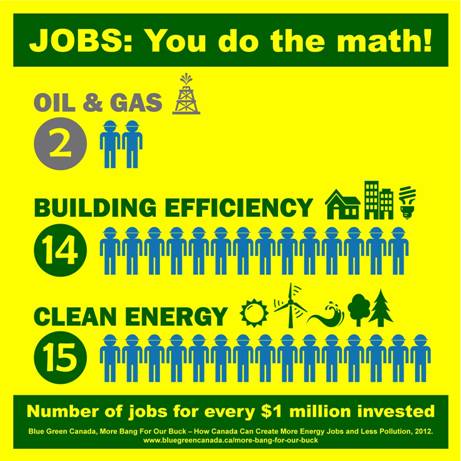
All the above mean that we will have to switch to alternative clean energies, which fortunately, are by far the fastest growing parts of the energy sector, creating huge numbers of jobs. Our time should be spent pursuing this sensible future.
Contrary to the Minister of Energy’s comments, delaying this industry is the only sensible thing to do. Gas is not like a factory that investors can move elsewhere for a better deal. In the unlikely events that in ten years it can be extracted safely, and the world wants it, investor’s will come here, because the gas will be here.
In the meantime, the citizens of New Brunswick have been loud and clear about not wanting their families to be guinea pigs in return for an uncertain promise of a few temporary jobs.
Eighty municipalities, thirty-three community groups, much of the medical establishment, agricultural and rural associations, religious organizations and a large number of unions, including the largest public and private sector unions in Canada have called for a ban, a ten-year moratorium or a simple halt to the shale gas industry.
It is time that the voices and will of those people are heard by the politicians who claim to represent them. We intend to track and publicize the positions of every candidate on this issue between now and the election. Candidates, expect to be hearing from your electorate.
Health Studies Referenced
“Human Health Risk Assessment of Air Emissions from Development of Unconventional Natural Gas Resources.”, Lisa McKenzie, Ph.D., MPH, University of Colorado School of Public Health, Science of the Total Environment.
Potential Public Health Hazards, Exposures and Health Effects from Unconventional Natural Gas Development † Colorado School of Public Health, University of Colorado Denver, 13001 E. 17th Place, Campus Box B119, Aurora, Colorado 80045, United States Graduate School of Public Health, University of Pittsburgh, 130 DeSoto Street, A710 Crabtree Hall, Pittsburgh, Pennsylvania 15261, United States, Environ. Sci. Technol., Article ASAP DOI:10.1021/es404621d Publication Date (Web): February 24, 2014
Environ Health Perspect; DOI:10.1289/ehp.1306722
Birth Outcomes and Maternal Residential Proximity to Natural Gas Development in Rural Colorado. Lisa M. McKenzie,1 Ruixin Guo,2 Roxana Z. Witter,1 David A. Savitz,3 Lee S. Newman,1 and John L. Adgate1, Colorado School of Public Health and Brown University.
“Estrogen and Androgen Receptor Activities of Hydraulic Fracturing Chemicals and Surface and Ground Water in a Drilling-Dense Region,” Susan Nagel, PhD. Missouri University School of Medicine, Endocrinology
Low Birth Weight Study, Janet Currie of Princeton University, Katherine Meckel of Columbia University, and John Deutch and Michael Greenstone of the Massachusetts Institute of Technology
New Brunswickers Calling for a Moratorium
Municipalities
Association francophone des municipalités du Nouveau-Brunswick (51 municipalities) These municipalities reaffirmed their position in October 2013, calling once again for a moratorium.
Kent Co. Regional Service Commission (14 municipalities )
Moncton
Hillsborough
Alma
Sackville
Memramcook
Hampton
Minto
Stanley
Bathurst
Sussex Corner
Quispamsis
Port Elgin
Wolastoqiyik First Nations Chiefs and Band Councils of NB and the Maliseet Grand Council (Oct 2013)
Medical Associations
New Brunswick College of Family Physicians with 700 members (April 2012)
Medical Doctors of the Moncton Hospital (June 2012)
Medical Doctors at Georges Dumont Hospital, Moncton (Sept. 2012)
New Brunswick Nurses Union with 6900 members (Dec. 2011)
Medical Staff at Sackville Memorial Hospital (May 2012 and again in May 2013)
New Brunswick Lung Association (Nov 2012)
Unions and Associations
Canadian Union of Public Employees with 30,000 members (April 2012)
NB National Farmers Union with 150 farms as members (March 2012)
Maritime Conference of the United Church of Canada (March 2012 and again in October 2013)
The Federation of Rural New Brunswickers (August 2012)
Public Service Alliance of Canada – Atlantic Region (July 2013)
Really Local Harvest Co-operative – South-east NB (Oct 2013)
KAIROS – Saint John and area chapter (Oct 2013)
Concerned Physicians of Rexton and Richebucto (Oct 2013)
Unifor – Canada’s largest energy union with 300,000 members, called for a national moratorium on fracking on Nov 14, 2013.
Community Groups
Citizens Coalition for Clean Air, Saint John
Concerned Citizens of Penobsquis
Corn Hill Area Residents Association
Conservation Council NB, Fredericton
Conservation Council NB, Moncton
Council of Canadians, Fredericton
Council of Canadians, St. John
Council of Canadians Atlantic Chapter Halifax, NS
Darling Island Fracking Intervention, Darling Island
Elgin Eco Association
Friends of Mount Carleton
Hampton Water First, Hampton
Harvey Action Team, Harvey
Community Forests International (Sackville)
Kent South NO SHALE GAS Kent Sud
Maliseet Grand Council, NB
Memramcook Action
Moncton Anti-Fracking
New Brunswickers Against Fracking
Our Environment, Our Choice, Kent County
Parents Against Everyday Poisons, Memramcook
Penniac Anti-Shale Org.
Petitcodiac Watershed Alliance
Quality of Life, Hampton/Norton
Sierra Club, Atlantic NB
SikniktukMikmaq Rights Coalition NB
Stanley Area Action Group
Sustainable Energy Group, Woodstock
Tantramar Alliance Against Hydro-Fracking, Sackville
Taymouth Community Association
Upper Miramichi Stewardship Alliance, Miramichi
Upper Environment Watch, Kent County
Water and Environmental Protection for Albert County
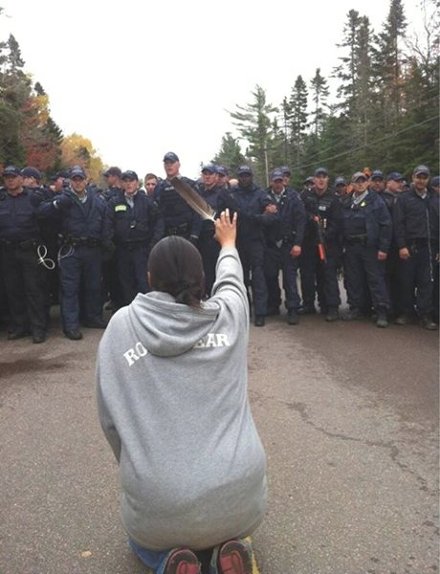
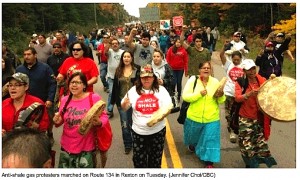 The group echoes the fears expressed in an Amnesty International letter to Premier David Alward and his cabinet dated, November 1, that unless steps are taken to rebuild the relationship with Indigenous Peoples with respect to resource development, further incidents could occur.